If you’ve ever opened a bag of pre-ground hazelnut flour and wondered whether you could make something better at home — you absolutely can, and the results are worth talking about. Home milling means grinding whole hazelnuts in a food processor, high-powered blender, or purpose-built grain mill to produce fresh flour on demand. The upside is real: fresher fat, tunable grind texture, and access to nut varieties and origins you simply can’t buy in flour form. The tradeoff is that you’re taking on a little more sourcing work upfront. This guide walks through the three main forms of whole hazelnut you’ll encounter — raw in-shell, blanched (skin removed), and roasted — and compares the major domestic and imported sourcing channels by price, quality markers, and practical fit for a home milling workflow. By the end, you’ll have a clear decision rule for your situation.
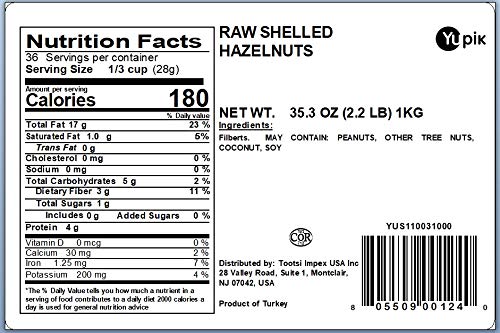
| EDITOR'S PICK[Roastery Coast Dry Roasted Haze…](https://www.amazon.com/dp/B07BY8L4SD?tag=greenflower20-20) | Mid-tier[Yupik Blanched Hazelnuts](https://www.amazon.com/dp/B07QX6PNFT?tag=greenflower20-20) | Budget pick[1 LB | Holmquist Hazelnuts Dry…](https://www.amazon.com/dp/B07DX8Q4X2?tag=greenflower20-20) | |
|---|---|---|---|
| Blanched | ✓ | ✓ | ✗ |
| Roasted | ✓ | ✗ | ✓ |
| Weight | 3 lb | 2.2 lb | 1 lb |
| Keto | ✓ | — | ✓ |
| Grown in USA | — | — | ✓ |
| Resealable Bag | — | — | ✓ |
| Price | $56.99 | $25.23 | $16.49 |
| See on Amazon → | See on Amazon → | See on Amazon → |
Why Mill Your Own? The Case for Freshness and Control
Pre-ground hazelnut flour is convenient, but it has one structural vulnerability: fat content. Hazelnuts are roughly 60–65% fat by weight, and that fat begins oxidizing — going rancid — the moment the nut is ground and its protective cell walls are broken open. Commercial nut flours are typically packed within days or weeks of grinding, then sit in a warehouse and on a shelf before reaching your kitchen. The result can be flour that tastes subtly stale or “off” even before the bag is opened.
Milling from whole nuts sidesteps that window. You grind what you need, when you need it, from nuts that have been stored in a relatively stable whole form. The Food52 staff editorial “How to Make Your Own Nut Flour” makes this point explicitly: the flavor difference between freshly milled and weeks-old pre-ground nut flour is perceptible in delicate applications — financiers, dacquoise, fine-crumb tarts — where hazelnut is a starring flavor, not a background note. For bakes where the flour is largely structural (a keto sandwich loaf, say), the difference matters less.
Beyond freshness, milling your own gives you grind control. Coarser passes produce a rustic, slightly toothsome texture good for frangipane and crumbles; finer passes approach the silky consistency of a commercial fine-ground flour. Serious Eats’ staff editorial coverage of nut flours in baking notes that grind fineness directly affects moisture absorption and spread in cookies and cakes — a variable you can’t adjust when you open a pre-ground bag.
The Three Forms: Raw, Blanched, and Roasted
Before comparing sourcing channels, you need to decide which form of hazelnut you’re buying. This is your most important decision, because each form produces meaningfully different flour.
Raw, in-shell hazelnuts are the least processed and typically the cheapest per pound at the whole-nut level, but they require the most prep. You’re cracking, blanching (dropping into boiling water briefly, then rubbing off the papery skin), and drying before you can mill. The skin, if left on, adds a slightly bitter, astringent note that works in rustic applications but can be distracting in delicate pastry. If you’re processing volume — say, 5–10 pounds at a time for batch freezing of flour — the economics can favor raw, but the labor is real.
Blanched hazelnuts (skin already removed, sold whole or halved) are the practical sweet spot for most home millers. The skin-removal work is done; the nut is still raw and full-fat, and it mills cleanly into pale, mild flour that behaves predictably in fine pastry. The King Arthur Baking guide to nut flours and grinding at home specifically recommends starting with blanched nuts when milling for delicate applications, citing the consistency advantage. Blanched hazelnuts cost roughly $1–3 more per pound than raw skin-on, a premium that most practitioners will find justified.
Roasted hazelnuts produce flour with the deepest, most complex flavor — the toasty, Nutella-adjacent profile that makes hazelnut distinctive. The tradeoff: roasting accelerates fat oxidation, so roasted hazelnuts have a shorter shelf life even in whole form, and the flour they produce is more perishable still. Roasted hazelnut flour is the right choice when flavor intensity is the explicit goal (a chocolate-hazelnut torte, a praline buttercream base) and you’re milling-to-use within hours or a day. It is not the right choice for batch milling and freezing.
Form Comparison at a Glance
| Form | Flavor | Milling Prep | Shelf Life (Whole) | Best For |
|---|---|---|---|---|
| Raw, in-shell | Mild, neutral | Crack + blanch + dry | 6–12 months, cool/dark | Batch economics, rustic bakes |
| Blanched, raw | Clean, mild | None | 3–6 months refrigerated | Fine pastry, reliable results |
| Roasted (blanched) | Deep, toasty | None | 2–3 months refrigerated | Flavor-forward applications |
Oregon-Grown vs. Imported: What Origin Actually Means
The United States grows approximately 99% of its hazelnuts in Oregon’s Willamette Valley, according to the Oregon Hazelnut Marketing Board’s 2024 Annual Production and Variety Report. The dominant cultivar has historically been Barcelona, though the industry has been aggressively replanting with Eastern Filbert Blight-resistant hybrids — primarily the Yamhill, Jefferson, and Wepster cultivars — over the last decade. These newer varieties tend toward a slightly rounder, less intensely flavored profile compared to Old World European hazelnuts, but they are fresher by default for domestic buyers: shorter supply chains mean less time in transit.
Piedmont hazelnuts — specifically the Tonda Gentile delle Langhe cultivar grown in the hills of Cuneo and Asti in northwestern Italy — occupy a different category entirely. Gustiamo’s product notes and supplier documentation for their Piedmont hazelnut sourcing describe the Tonda Gentile as prized for its near-spherical shape, thin skin, and high aromatic intensity — characteristics that have made it the preferred nut of European chocolatiers and confectioners for generations. If you’ve tasted a high-quality gianduja or a French praline paste, you’ve tasted Tonda Gentile. For home milling, the flavor argument for Piedmont is strong; the cost argument requires more thought (see pricing below).
Turkish hazelnuts — the world’s largest hazelnut crop by volume, accounting for the majority of global commodity supply according to FAO agricultural data cited by the Oregon Hazelnut Marketing Board — are the baseline for most commercial nut processing. Domestic Turkish supply is not meaningfully available through specialty retail at the artisan level, but understanding that much of the “generic” hazelnut supply chain runs through Turkey is useful context when evaluating sourcing claims.
Sourcing Channels and Pricing: Three Tiers
The sourcing landscape for whole hazelnuts breaks cleanly into three tiers defined by origin, processing, and price point. Here’s how each tier maps to home milling needs.
Budget Tier: Farm-Direct Oregon Raw In-Shell
Several Willamette Valley farm operations and Pacific Northwest cooperatives sell raw in-shell hazelnuts direct to consumers in 5–25 pound lots. Across current retail listings, raw in-shell Oregon hazelnuts run approximately $6–10 per pound at farm-direct or regional co-op pricing — the lowest cost-per-pound entry point in the domestic market.
The catch is prep labor. Cracking, blanching, and drying a 5-pound batch before milling is a real time investment. Plan for a 20-minute boiling-and-rubbing session plus a 15–20 minute drying pass at 200°F in the oven (spread on a sheet pan, single layer) before the nuts are ready to mill. For practitioners who are processing volume — batch-prepping flour for a patisserie case or filling multiple recipe rounds across a baking week — this workflow delivers the best unit economics available. For the occasional baker making one tart shell at a time, the labor math doesn’t pencil.
A 100g flour yield from raw in-shell hazelnuts costs approximately $1.75 once you account for the 40–45% usable nut yield after cracking and blanching (meaning you need roughly 220–250g of starting in-shell weight to produce 100g of millable blanched nut).
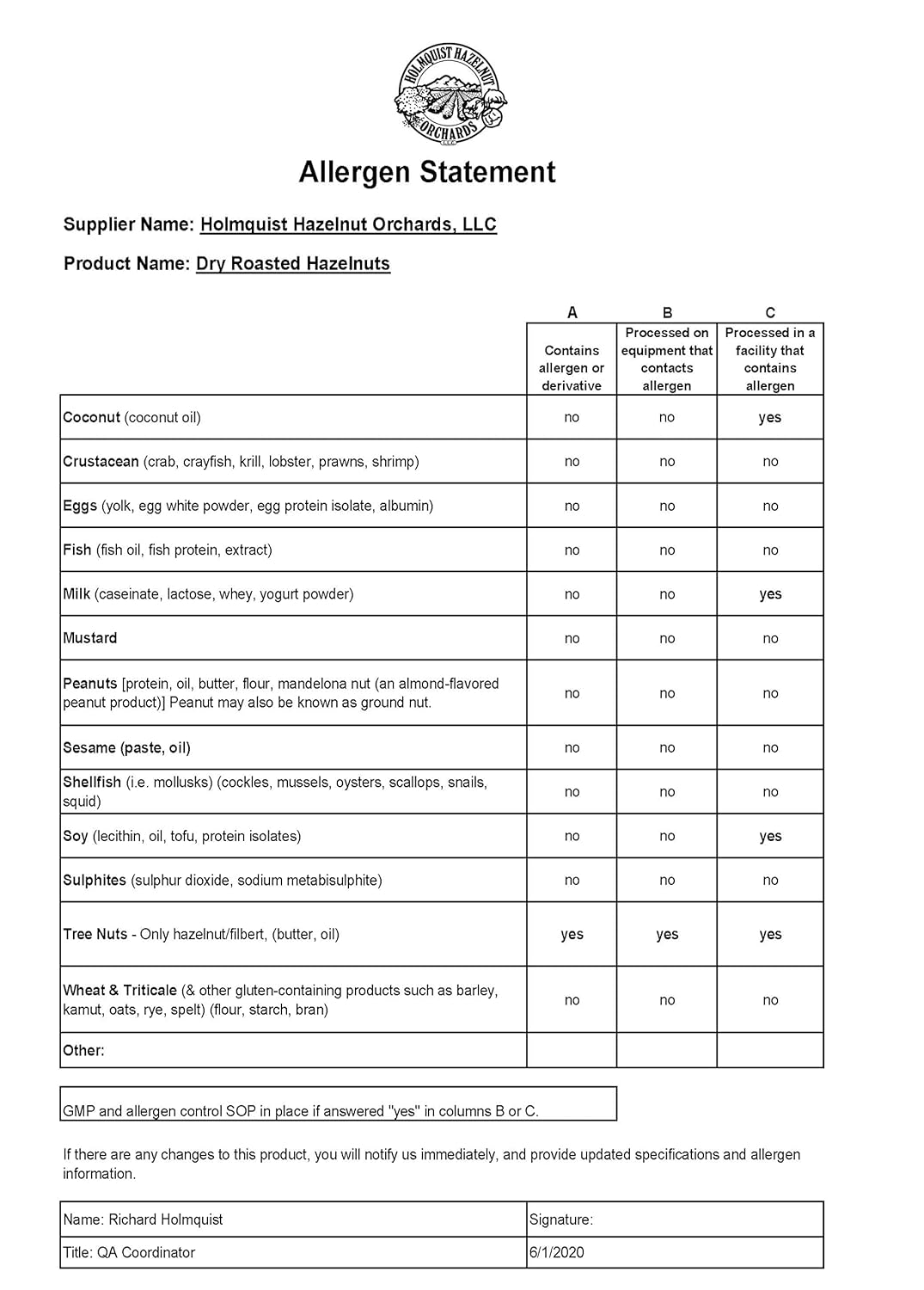
1 AIR
$16.49
In stock on Amazon
Check price on AmazonMid-Tier: Domestic Blanched Whole Hazelnuts
Blanched Oregon-grown and generic domestic hazelnuts are available through specialty food retailers and high-turnover online sources. Nuts.com carries blanched domestic whole hazelnuts at approximately $13–16 per pound, with consistent grading and high enough turnover that freshness risk is low. Regional specialty grocers and natural food retailers with good nut turnover often carry comparable product in the $12–18 per pound range.
This is the practical optimum for most home millers. The skin-removal work is done, the nut is still raw and full-fat, and it mills cleanly into pale, mild flour. The King Arthur Baking guide to nut flours specifically recommends blanched nuts as the starting point for fine pastry applications, citing consistent results and clean flavor. For financiers, frangipane, hazelnut dacquoise, nut-forward cookies, and tart shells where hazelnut is a major but not singular flavor, Oregon blanched at this price tier is the right call.
A 100g flour yield at this tier costs approximately $3.08–3.30 — a reasonable spend for a recipe component of this quality level.
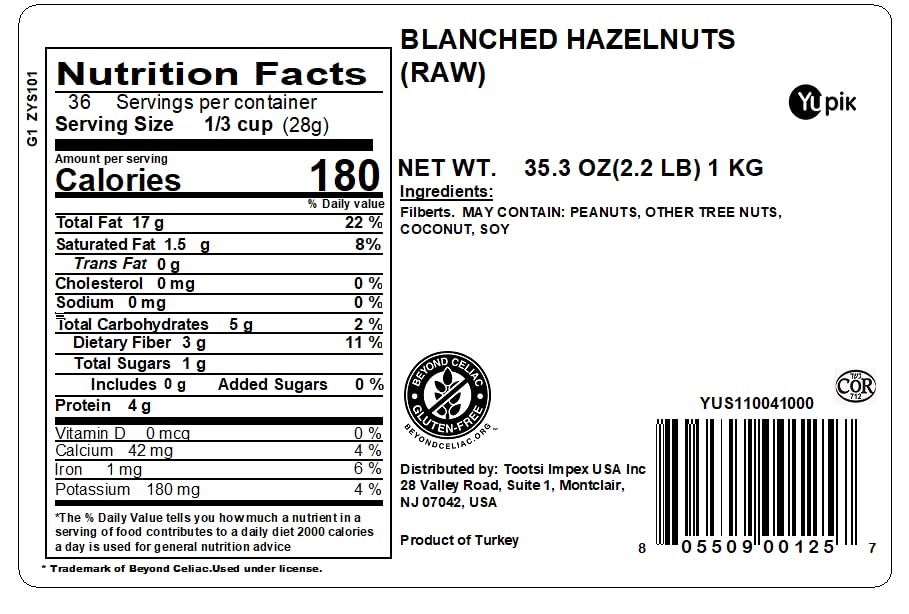
Yupik
$25.23
In stock on Amazon
Check price on AmazonPremium Tier: Piedmont Tonda Gentile (Imported)
Gustiamo is the most accessible U.S. importer of Tonda Gentile delle Langhe hazelnuts, with whole blanched and roasted options available through their retail operation. Pricing for Piedmont hazelnuts through Gustiamo and comparable specialty importers runs $28–45 per pound, depending on form and harvest year. This is not an impulse buy — it’s a deliberate sourcing decision anchored to a specific, irreplaceable flavor outcome.
Gustiamo’s product documentation describes the Tonda Gentile as exhibiting markedly higher aromatic intensity than commercial domestic varieties — a characterization consistent with its status as the benchmark nut for European gianduja and praline production. When hazelnut is the explicit star of a recipe (a Piedmont-style torta di nocciole, a gianduja ganache, a praline feuilletine destined for a competition-level entremet), the flavor case for Tonda Gentile is genuinely compelling.
One logistical note: the 2023 and 2024 Piedmont hazelnut harvests were both affected by summer drought, and supply tightness has kept imported pricing elevated through early 2026. If you’re budgeting for a large bake or a batch of praline work, purchasing before the 2026 harvest reports land in late summer is a reasonable hedge against further price movement.
A 100g flour yield at this tier costs approximately $8.36 — proportionate to what it delivers in applications where the hazelnut flavor is the entire point.
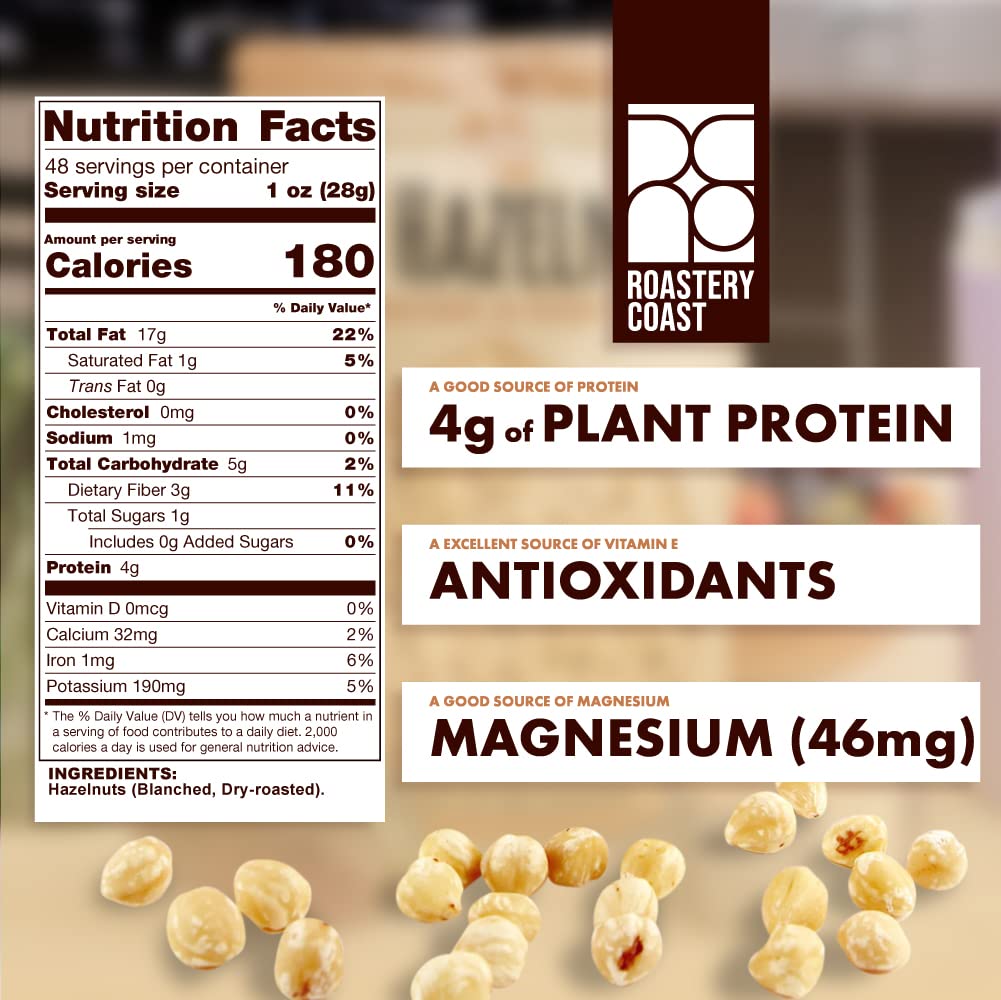
Roastery
$56.99
In stock on Amazon
Check price on AmazonMilling Logistics: What Your Equipment Can Handle
This guide isn’t equipment-focused, but sourcing decisions interact directly with milling realities. A standard food processor (13-cup capacity or comparable) handles blanched hazelnuts well in batches of 200–400g using pulse technique — longer uninterrupted runs produce nut butter, not flour. High-powered blenders with a dry grains container configuration produce a finer, more consistent grind. Dedicated grain mills designed for high-fat nuts can work, but the King Arthur Baking milling guidance specifically cautions against long uninterrupted runs with high-fat nuts, noting that heat buildup from extended milling causes fat to release and the meal to clump toward paste.
The practical implication: blanched hazelnuts, sourced from any of the three tiers above, work in all of these equipment paths with proper pulse technique. Raw in-shell hazelnuts, after cracking and home blanching, introduce variable moisture and inconsistent nut size that makes controlled milling harder regardless of equipment. The drying step — 15–20 minutes at 200°F on a sheet pan — is not optional.
Freshly milled flour should go into the recipe immediately or be frozen in an airtight container. The Food52 staff editorial on making nut flour at home recommends freezing milled nut flour in recipe-sized portions, noting that frozen flour retains quality for up to three months, versus days at room temperature. The Serious Eats editorial on nut flours in baking echoes this: for high-fat nut flours specifically, freezer storage between milling and use is the standard practice in professional kitchens, not a special precaution.
The Decision Rule
Here’s how to match your sourcing choice to your actual baking context:
If your priority is maximum flavor intensity and you’re making something where hazelnut is unambiguously the star — a torta di nocciole, a gianduja ganache, a praline base — buy Piedmont Tonda Gentile from Gustiamo or a comparable importer, in blanched or roasted form, and mill to order. The $8/100g cost is real, but it’s proportionate to what you’re making.
If your priority is consistent, fresh, high-quality domestic flour for a range of everyday applications — financiers, frangipane, hazelnut dacquoise, nut-forward cookies — Oregon blanched whole hazelnuts from a high-turnover domestic source at $13–16/lb is the practical optimum. Good flavor, reliable freshness, reasonable cost-per-recipe.
If you’re milling in volume for semi-commercial use or batch-prepping flour for a heavy baking schedule — farm-direct Oregon raw in-shell at $6–10/lb with your own blanching workflow delivers the best unit economics, provided you have the setup and drying capacity to handle volume.
If you’re new to home milling and want to start without major investment — buy a 1-pound bag of blanched domestic hazelnuts from a reputable online source, mill a small batch in your food processor using pulse technique, and compare the result against a commercial fine-ground flour in the same recipe. The freshness difference will answer the “is this worth doing?” question faster than any sourcing guide can.
The whole-hazelnut sourcing decision is ultimately a question of what you’re optimizing for: maximum flavor intensity, freshest-possible domestic supply, best cost per gram, or lowest-friction entry into home milling. Name your priority, match it to the sourcing tier above, and you’ll spend your flour budget well.