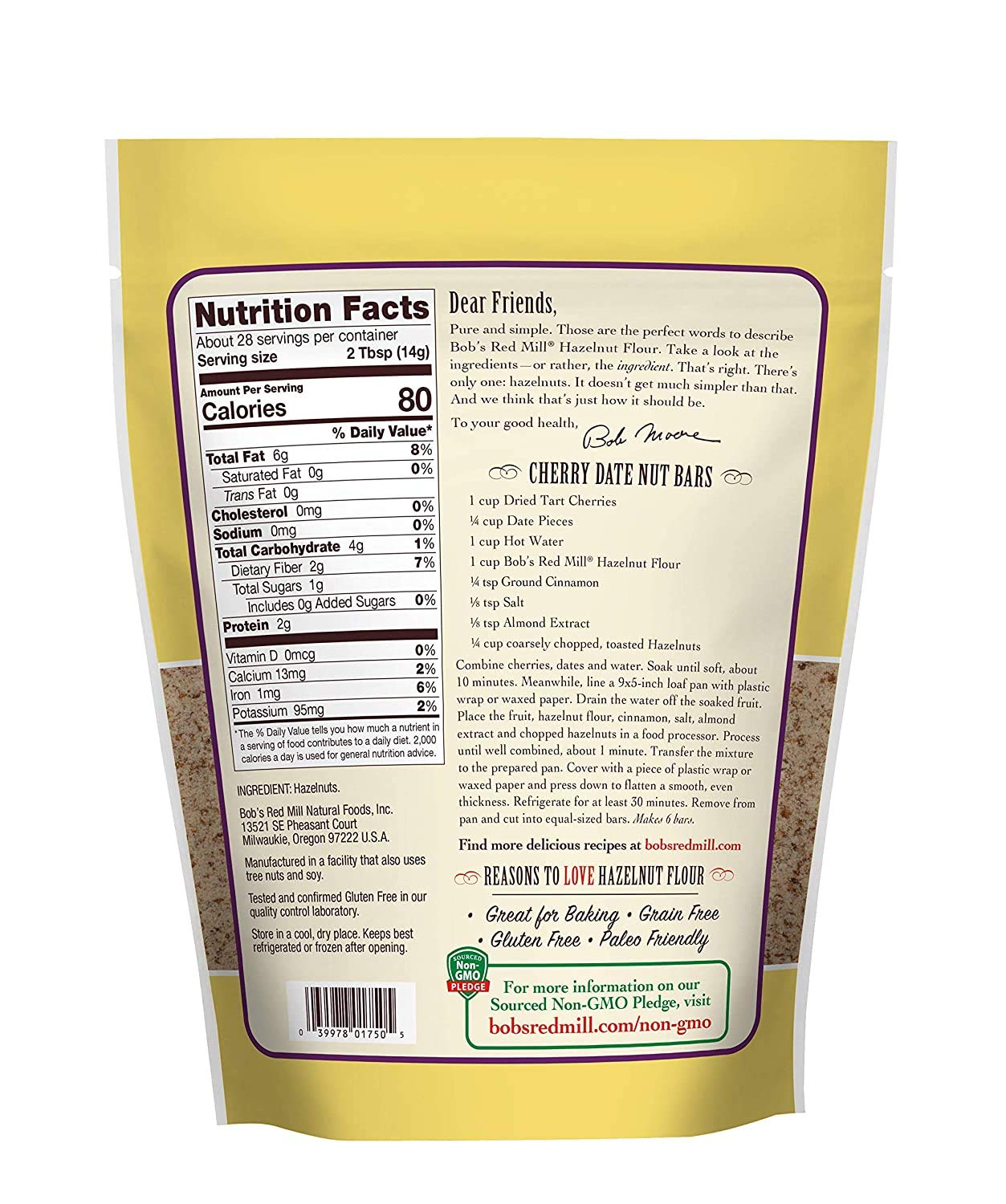
If you’ve ever opened a bag of hazelnut flour and been hit with a smell somewhere between old crayons and stale cooking oil, you’ve met rancidity firsthand. Rancidity is what happens when the natural fats in a food oxidize — meaning they react with oxygen in the air and break down into compounds that smell and taste unpleasant. Hazelnut flour is particularly vulnerable because it’s essentially finely ground hazelnuts, and hazelnuts are roughly 60–65% fat by weight. That fat is what makes hazelnut flour so rich and delicious in financiers, tarts, and dacquoise — but it’s also a liability the moment the bag is open. This guide is for bakers who have already committed to the ingredient and want to protect their investment: you’ll learn exactly what causes rancidity, which storage methods actually work, how long different products realistically last, and how to build a system that makes sense whether you’re buying a $12 bag from Anthony’s Goods or a $50-per-pound import from Gustiamo.
Why Hazelnut Flour Goes Rancid So Much Faster Than Wheat Flour
The comparison to all-purpose flour is worth making explicit, because it clarifies the stakes. All-purpose wheat flour is roughly 1–2% fat. Hazelnut flour sits between 50–65% fat depending on whether it’s full-fat (ground whole hazelnuts) or partially defatted (ground from hazelnuts after some oil has been pressed out). That fat differential isn’t a minor footnote — it changes the entire spoilage model.
Per Healthline’s overview of oxidative rancidity, the primary culprit is lipid oxidation: unsaturated fats react with atmospheric oxygen to produce aldehydes, ketones, and carboxylic acids, which are the compounds your nose detects as “off.” Hazelnut oil is predominantly oleic acid (monounsaturated) with meaningful polyunsaturated fractions, both of which oxidize faster than the saturated fats dominant in coconut flour or even almond flour. Serious Eats’ coverage of nut flour spoilage reinforces this — the polyunsaturated content is the real accelerant; oleic acid oxidizes more slowly, which is why hazelnut flour has a longer shelf life than walnut or flaxseed flour but shorter than almond flour.
What accelerates oxidation:
- Oxygen exposure — every time you open the bag, you introduce fresh oxygen
- Heat — oxidation rates roughly double for every 10°C / 18°F rise in temperature (per USDA Agricultural Research Service findings on lipid oxidation in tree nut products)
- Light — UV and visible light catalyze free-radical chain reactions in fats
- Moisture — promotes mold and accelerates fat hydrolysis, a secondary form of spoilage
The practical implication: a bag of hazelnut flour left on a warm countertop, loosely folded shut, in a sunny kitchen can go noticeably stale in as little as two to three weeks after opening. The same flour in an airtight container in a freezer can remain perfectly usable for nine to twelve months.
The Honest Shelf-Life Numbers (By Storage Method)
This is where the decision-framing gets concrete. The numbers below are drawn from guidance published by King Arthur Baking Company and America’s Test Kitchen, cross-referenced against USDA research on nut fat stability.
By the Numbers: Hazelnut Flour Shelf Life
| Storage condition | Unopened | After opening |
|---|---|---|
| Room temp, pantry (sealed bag) | 3–6 months | 2–4 weeks |
| Airtight container, cool pantry (65°F / 18°C) | 6–9 months | 4–6 weeks |
| Refrigerator, airtight | 9–12 months | 2–3 months |
| Freezer, airtight (0°F / -18°C) | 12–18 months | 6–12 months |
A few important caveats on these ranges:
Fat content matters. Full-fat hazelnut flour (the kind made from whole hazelnuts, common in European imports and stone-milled domestic products) oxidizes faster than partially defatted flour because there’s simply more vulnerable fat present. If you’re working with a Piedmont import where the fat content is listed at 62–65%, skew toward the shorter end of every range above.
Grind fineness matters too. Finer-ground flours have greater surface area, which means more fat is exposed to oxygen per gram. A super-fine, blanched, stone-milled flour from a small-batch mill will degrade faster than a coarser commercial grind from a mass-market brand — even at identical fat percentages. This is one of the real tradeoffs of premium flour: you’re paying for quality that requires more careful handling.
Packaging quality at purchase matters. Vacuum-sealed or nitrogen-flushed packaging (increasingly common among specialty importers and some domestic mills) displaces oxygen before you ever open the bag, giving you a meaningful head start. A standard heat-sealed foil bag is adequate but not inert. A plain paper bag — common with bulk and health-food store purchases — offers essentially no oxidation protection and should be transferred to an airtight container immediately.
Storage Systems That Actually Work
The Freezer-First Default
America’s Test Kitchen’s guidance on alternative flour storage is direct: for any nut-based flour you won’t use within a month, the freezer is the right call. The cold dramatically slows oxidation, and unlike some moisture-sensitive ingredients, hazelnut flour handles freeze-thaw cycles reasonably well if managed correctly.
The key discipline is portion and seal before you freeze. Divide a new bag into recipe-sized portions — 100g or 200g units work well for most applications — in separate airtight bags, press out as much air as possible, and freeze. When you pull a portion to use, let it come to room temperature while still sealed. This prevents condensation from forming on the flour itself. Opening a frozen bag and letting warm room air hit cold flour is how you introduce moisture into a product that already has rancidity and mold to contend with.
The containers that get consistently positive reviews from home bakers and pro pastry cooks for this purpose are straight-sided glass mason jars with tight-fitting lids (for fridge storage) and heavy-duty zip-lock freezer bags with the air manually pressed out (for freezer). Vacuum-seal bags with a handheld pump are a meaningful upgrade for longer-term freezer storage — reviewers working in boutique patisserie contexts note that this approach extends usable freezer life noticeably and is worth the modest investment if you’re buying in bulk.
The Fridge as a Middle Option
If you bake with hazelnut flour frequently — say, two or three times a week — the refrigerator is a reasonable compromise. You avoid the portion-and-thaw discipline of the freezer while still dramatically slowing oxidation compared to a room-temperature pantry. The practical requirement is an airtight container. A bag folded over and clipped will not cut it in a refrigerator environment, where humidity fluctuations and odor transfer are real problems. Use a container with a gasket seal.
One specific concern for fridge storage: odor absorption. Hazelnut flour’s fat content makes it an efficient absorber of ambient smells. Bakers who store hazelnut flour in a crowded refrigerator without a sealed container consistently report off-flavors — the flour picks up traces of whatever is nearby. This is not a minor issue when you’re working with a $40-per-pound import where the flavor nuance is the point.
Room Temperature: When It’s Acceptable
For bakers who go through hazelnut flour quickly — an entire bag in one or two baking sessions — room-temperature storage for a few days is fine. The preconditions: a cool kitchen (under 68°F / 20°C), an airtight container, and no direct light exposure. This rules out most spring and summer baking seasons in non-climate-controlled kitchens, and it’s essentially non-viable in a professional kitchen where ambient temperatures run higher.
How to Tell If Your Hazelnut Flour Has Turned
The sensory check is more reliable than any date stamp, and learning it saves you from ruined batches.
Smell it first. Fresh hazelnut flour smells sweet, nutty, faintly grassy — the aroma is recognizably pleasant even to someone unfamiliar with it. Rancid hazelnut flour smells distinctly unpleasant: crayon-like, paint-adjacent, or sharply bitter-sour. Healthline’s overview of oxidative rancidity describes the aldehyde and ketone compounds responsible for these odors as detectable at very low concentrations — meaning your nose will catch the problem before it’s severe enough to obviously ruin a bake. Trust the smell.
Taste a pinch. Rancid flour tastes bitter, astringent, or lingering in an unpleasant way. A small taste of good hazelnut flour should be mild, rich, and pleasant. If it tastes wrong, it will taste wrong baked into a financier or tart crust too — probably more so, since heat can volatilize the oxidation compounds and concentrate off-flavors.
Look at the color. Rancidity itself doesn’t change color dramatically, but the presence of visible clumping, discoloration, or any signs of moisture (dark spots, caking) indicates either rancidity, mold, or both. Either way, discard.
The practical rule: when in doubt, discard. At $12–18 per bag for accessible brands, and $30–55 per pound for premium imports, the cost of wasted flour is real — but so is the cost of a failed bake. A tart shell or dacquoise made with rancid flour doesn’t just taste bad; it signals rancidity to everyone eating it, including clients if you’re in a commercial context.
The If-X-Then-Y Decision Rules
If you buy one bag per month or less: Freeze immediately on arrival. Portion into baking-session units before freezing. Pull and thaw sealed, same-day.
If you bake with hazelnut flour multiple times per week: Refrigerator in an airtight, gasket-sealed container is your working stock. Keep no more than two to three weeks’ worth at room temperature; freeze the rest.
If you’re buying premium full-fat flour (62%+ fat, fine-ground, single-origin): Treat the freezer as non-negotiable, not optional. The investment per pound and the flavor nuance both justify the extra handling discipline. Vacuum-seal bags are worth adding to your setup.
If you’re buying bulk for commercial or semi-commercial use: Divide on arrival, freeze in multi-week portions, and log the freeze date. Most serious bakers and pastry cooks working at this scale also perform a smell-and-taste check on every new lot — not as paranoia, but as basic quality control, since even well-packaged flour can arrive with shortened freshness windows depending on importer and transit conditions.
If your flour is already open and you’re unsure of its age: Smell and taste it before you put it in a batter. If you can’t remember how long it’s been, that’s your cue to check. The two minutes you spend on this check are cheaper than any bake it might ruin.
The fundamental tradeoff of hazelnut flour — rich, complex flavor derived from high fat content — is inseparable from its storage demands. Managing rancidity isn’t a complication of working with this ingredient; it is working with this ingredient at a serious level. Treat it accordingly and the flour will reward you. Treat it like all-purpose and it won’t.