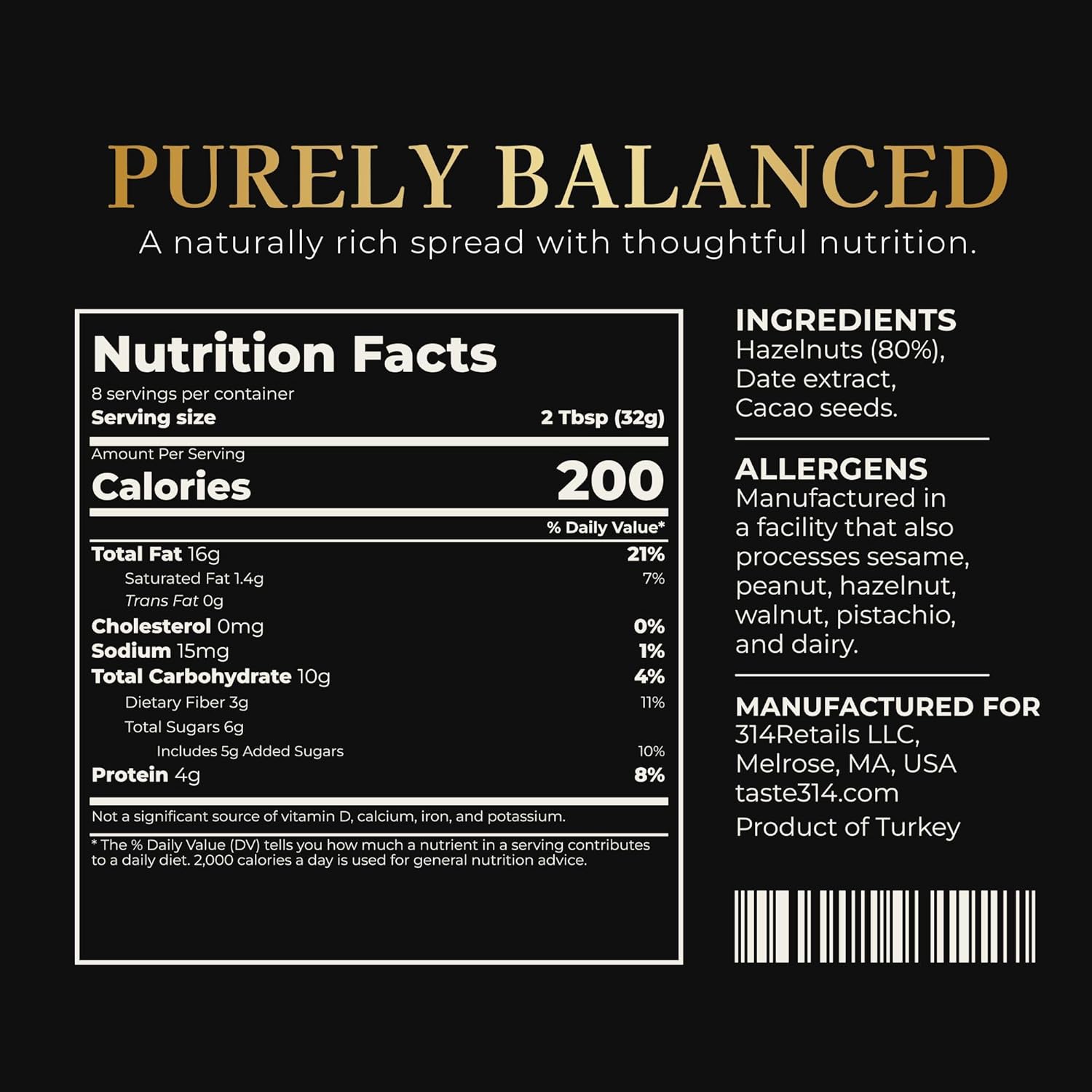
If you’ve ever stirred a spoonful of Nutella into a brownie batter hoping to amp up the hazelnut flavor — only to end up with a result that tastes faintly of chocolate but not much else — you already understand the core problem this article addresses. Hazelnut spreads (sweetened, emulsified products designed for spreading on bread) and hazelnut pastes (concentrated, minimally processed hazelnut products used in professional pastry) are fundamentally different ingredients that behave in completely different ways once heat, fat, and sugar get involved. One is engineered for the jar; the other is engineered for the oven. Knowing which you’re holding — and what it will actually do in your recipe — is the difference between a hazelnut financier that tastes like the nut itself and one that tastes like a memory of a chocolate-hazelnut candy bar. This guide breaks down the real distinctions, the math behind yield and cost, and the clear decision rules you need before you spend $18 or $80 on a jar.
| EDITOR'S PICK[powbab Hazelnut Paste - 100% US…](https://www.amazon.com/dp/B096N5H7CL?tag=greenflower20-20) | Mid-tierBob's Red Mill Hazelnut Flour/M… | Budget pick[Nutural World - Smooth Hazelnut…](https://www.amazon.com/dp/B07SSV6Z87?tag=greenflower20-20) | |
|---|---|---|---|
| Form | Paste | Flour/Meal | Butter |
| Ingredients | 100% USA Grown Hazelnuts | Hazelnuts | 100% Pure/Single Ingredient |
| Added Sugar | ✗ | — | — |
| Keto Friendly | ✓ | ✓ | — |
| Net Weight | 8 oz | 14 oz | 6 oz |
| Price | $27.99 | $16.83 | $14.99 |
| See on Amazon → | See on Amazon → | See on Amazon → |
Spread vs. Paste vs. Praline: A Vocabulary That Actually Matters
Before any purchasing decision makes sense, it helps to lock down three terms that are often used interchangeably in recipes but describe genuinely different products.
Hazelnut spread is what Nutella is: a blend of hazelnuts (often at 13% or less by weight), sugar, palm oil, skim milk powder, cocoa, and emulsifiers. It’s shelf-stable, smooth, and formulated for spreadability at room temperature. The nut content is low; the sugar and fat matrix is dominant. When you bake with it, you’re mostly baking with a sweetened chocolate fat.
Hazelnut paste (sometimes labeled pure hazelnut paste or pasta di nocciole) is roasted hazelnuts ground to a smooth or semi-smooth consistency, with little or no added sugar and no added oil. Fat content comes entirely from the nut’s own natural oils — typically 60–65% fat by weight, per Gustiamo’s sourcing documentation on Piedmont hazelnut products. This is the product serious pastry cooks reach for when they want flavor, not sweetness.
Hazelnut praline paste sits between those two. It’s hazelnuts that have been caramelized with sugar, then ground — think of it as the base filling inside a good praline bonbon, blended smooth. The sugar is already cooked into the nut, giving it a deeper, more complex caramel-nut flavor. It’s sweeter than pure paste but far more hazelnut-forward than a commercial spread.
Why it matters for buying decisions: If your recipe calls for hazelnut paste and you substitute a commercial spread, you are changing the sugar load, the fat source, the cocoa presence, and the moisture content all at once. The formula you’re working from will not behave as written. America’s Test Kitchen’s coverage of nut paste applications in pastry notes this substitution as one of the most common sources of texture failure in home versions of French pastry recipes.
The Fat and Sugar Math You Need Before You Buy
Here’s where the practitioner lens earns its keep. When you’re deciding whether to spend $18 on a jar of supermarket-brand hazelnut spread or $45–$65 on a 500g tub of Piedmont pure paste imported through a specialty source, the question isn’t just quality — it’s functional yield per dollar.
By the numbers — approximate 2026 retail pricing:
| Product Type | Price Range (per 500g) | Hazelnut % by Weight | Sugar per 100g |
|---|---|---|---|
| Commercial spread (Nutella-style) | $8–$14 | 13–20% | ~55g |
| Mid-range pure paste (Anthony’s, domestic) | $18–$28 | 98–100% | 0–2g |
| Piedmont single-origin paste (Gustiamo, specialty importers) | $45–$70 | 98–100% | 0–2g |
| Praline paste (professional pastry suppliers) | $30–$55 | 50–60% (remainder is caramelized sugar) | ~35g |
The implication: a recipe calling for 100g of pure hazelnut paste and replaced with 100g of commercial spread is receiving roughly 13–20g of actual hazelnut versus 98–100g. You would need to use roughly 5× the spread volume to approach the same nut-flavor intensity — at which point you’ve also added 275g of sugar and substantial cocoa, which rewrites the recipe entirely. Food52’s piece on the difference between hazelnut paste and spread makes this exact point, noting that flavor parity between the two product types is essentially impossible at equivalent weights.
The cost-per-recipe calculation: A chocolate-hazelnut tart that requires 150g of pure paste draws approximately $13.50–$21 worth of ingredient from a Piedmont import at $45–$70/500g. From a domestic mid-range paste, that same 150g costs roughly $5.40–$8.40. From Nutella, you’re spending maybe $3 — but you’re not making the same tart. The premium is real, but so is the functional difference.
What Each Format Actually Does in a Recipe
This is the decision core. Understanding which applications favor which product type will save you a failed bake and a wasted jar.
Pure Hazelnut Paste
Works best in: Financiers, dacquoise, gianduja ganaches, hazelnut buttercream, ice cream bases, frangipane variations, and anywhere you want the nut flavor as the primary note with full control over your own sugar levels.
Because pure paste is essentially 100% nut with natural oils intact, it behaves more like a nut butter than a spread. King Arthur Baking’s guidance on substituting nut butters in baking notes that high-fat nut pastes contribute to tenderness and moisture retention in cakes and cookies in the same way that brown butter does — through fat-coated protein strands that resist toughening. The result is a crumb that’s rich but not cakey in the wrong way.
Watch for: Separation. Pure paste — especially stone-ground or minimally processed varieties — will separate on the shelf as the natural oils rise to the surface. This is not a defect; it’s a sign of minimal processing. Stir thoroughly before measuring and, critically, bring to room temperature before incorporating into a batter. Cold paste seizes in emulsified batters and creates streaks.
Grind fineness matters here. A coarsely ground paste (some domestic single-origin products have visible nut particulate) will read as textural in a smooth ganache or buttercream. A fine-ground Piedmont paste from a supplier like Gustiamo will incorporate seamlessly. If your application is a smooth filling or glaze, match the grind to the task. Gustiamo’s product documentation on their Piedmont hazelnut offerings specifies the grind level, which is worth reading before purchasing for precision applications.
Hazelnut Praline Paste
Works best in: Praline mousseline, Paris-Brest filling, praline tarts, layered entremets, and semifreddo bases where the caramel-nut flavor profile is intentional.
Praline paste is pre-sweetened, which means you must account for it in your formula. Professional pastry suppliers typically list the sugar-to-nut ratio on their spec sheets — a 50/50 praline paste contributes significant sweetness. Reduce other sugar in the recipe accordingly, or you’ll over-sweeten. Serious Eats’ science coverage of nut-based baking confirms that caramelized sugar in praline paste also affects browning behavior in the oven: the Maillard reaction accelerates, meaning praline-enriched batters will brown faster than their pure-paste equivalents at the same temperature.
Watch for: Bloom. Praline paste exposed to humidity can develop a grainy, sandy texture as the caramelized sugar recrystallizes. Store in an airtight container away from temperature fluctuations. Once opened, most professional-grade praline pastes are best used within 6–8 weeks for peak texture, though they remain food-safe longer.
Commercial Hazelnut Spread
Works best in: Swirl applications (marble cakes, babka fillings, rolled pastries), dipping sauces for churros or crepes, no-bake cheesecake layers, and as a flavor note in situations where the chocolatey-sweet profile is intentional rather than incidental.
The honest practitioner take: commercial spread is not a pastry ingredient in the technical sense. It’s a condiment that happens to be deployable in baking when its full flavor profile — chocolate, sugar, dairy, hazelnut-adjacent — is what you want. If that’s your goal, it works well and costs little. The mistake is treating it as a hazelnut delivery vehicle when it’s really a sweetened chocolate-fat system with hazelnut undertones.
Where it earns its place: Babka. The swirled filling in a hazelnut-chocolate babka is one application where commercial spread’s emulsified smoothness and high-sugar content actually contribute to the right result — a glossy, fudge-like interior that doesn’t dry out during the long bake. Pure paste would behave differently: less cohesive, more liable to separate. For this application, the lower-cost spread is arguably the correct technical choice.
Storage, Rancidity, and the Shelf Life Trap
High-fat nut pastes carry a risk that spreads — with their added palm oil, emulsifiers, and higher sugar content — largely do not: rancidity. The same natural oils that make a Piedmont pure paste taste vivid and roasty will turn sharp and unpleasant within weeks of opening if stored poorly. Serious Eats’ coverage of nut butter storage recommends refrigeration after opening for any product without preservatives, though this thickens pure paste significantly. The practical solution is to portion your paste into smaller airtight containers, keep one portion at room temperature for current use (within 2 weeks), and refrigerate or freeze the remainder.
Praline paste is somewhat more stable due to the sugar content, but the same oxidation risk applies to the fat fraction. The rancidity threshold — the point at which the off-flavor becomes detectable in a finished bake rather than just in a raw taste — is lower than most home bakers expect. If your hazelnut financiers taste flat or slightly bitter despite good technique, the paste is the first thing to evaluate.
The Decision Rule
If you’re landing on this guide because you have a specific recipe in front of you and a purchasing decision to make, here’s the distilled framework:
-
If the recipe is a French or Italian pastry formula (financier, Paris-Brest, gianduja, praline entremet): Buy pure hazelnut paste or praline paste. Commercial spread will not produce the intended result. Budget $18–$70 depending on origin and grind requirements.
-
If the recipe is a swirl, roll, or babka-style bread filling: Commercial spread works and may actually be the better technical choice. Budget $8–$14 for a 500g jar from any well-stocked supermarket.
-
If you want the best hazelnut flavor with full formula control: Single-origin Piedmont paste from a specialty importer is the answer. The premium over domestic mid-range paste is real — roughly 2–2.5× the cost per gram — but so is the flavor difference, particularly in applications where hazelnut is the lead note.
-
If you’re scaling recipes commercially or semi-commercially: Pure paste in 1kg or larger units from professional pastry supply channels significantly reduces cost-per-recipe, and the grind consistency specs are typically more reliable than small-jar retail product. Evaluate praline paste options at the same time; having both on hand covers most classic European pastry applications.
The jar on your shelf is only ever as useful as your understanding of what’s inside it. Nutella built its reputation on toast, not tarts — and knowing that distinction is what separates a confident purchase from an expensive disappointment.