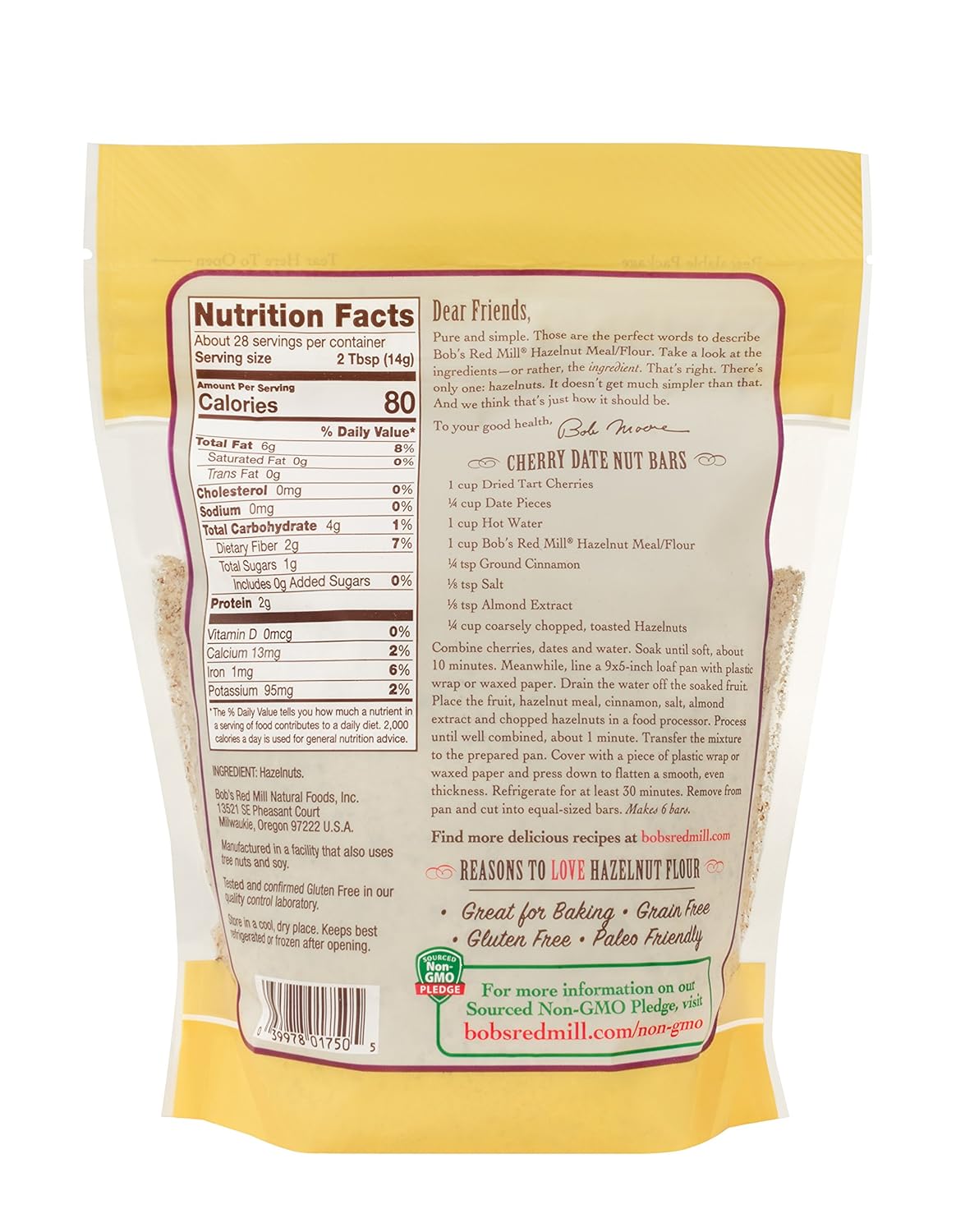
If you’ve been baking keto or paleo for a while, you’ve almost certainly worked with almond flour — the workhorse of low-carb kitchens everywhere. But hazelnut flour (finely ground dried hazelnuts, with most of the skin either left on or blanched off) occupies a genuinely different lane. It brings a richer, more complex flavor — think toasty, faintly sweet, almost chocolatey in the right recipe — and a fat-to-carb profile that holds up beautifully to the demands of grain-free baking. The catch is that hazelnut flour behaves differently enough from almond flour that a straight 1:1 swap can quietly wreck a recipe. This guide walks you through the macros that matter for keto and paleo goals, the substitution ratios that actually work, and an honest comparison of the brands you’re most likely to encounter — from the $12 pantry staple to the $50-per-pound Piedmont import.
Why Hazelnut Flour Works for Keto and Paleo Baking
The fundamental appeal is straightforward: hazelnut flour is low in digestible carbohydrates, high in fat (mostly monounsaturated), and carries a protein contribution that helps with structure in grain-free bakes. Per the USDA FoodData Central hazelnuts entry (SR Legacy dataset), a 100-gram serving of raw hazelnuts contains roughly 17 grams of carbohydrate, of which about 10 grams is dietary fiber — leaving a net carb figure (total carbs minus fiber, the metric most keto bakers track) of approximately 7 grams per 100g. In a typical 30-gram portion of hazelnut flour used in a single-serve recipe, that’s closer to 2–2.5 grams of net carbs.
For paleo bakers, the calculus is slightly different — the concern is less about precise carb counting and more about avoiding grains, legumes, and refined ingredients. Hazelnut flour clears all three hurdles cleanly, and the Healthline overview of hazelnut nutrition notes that its micronutrient profile (vitamin E, manganese, B vitamins) aligns well with the whole-food philosophy that paleo frameworks prioritize.
What actually makes hazelnut flour technically interesting for grain-free baking is its fat content — typically 60–65% by weight, depending on how much oil was pressed out during milling. That fat does two things in a recipe: it contributes tenderness and a short, crumbly texture (similar to a fine shortbread), and it makes the flour behave more like a fat-enriched pastry medium than a neutral starch. The King Arthur Baking guide on nut flours notes that this high fat content means nut-flour-based batters don’t develop gluten structure the way wheat doughs do — which is both the feature and the bug you need to plan around.
The Macros That Actually Matter: A Quick Reference
Before brand comparisons, get these numbers anchored. The figures below represent typical values from manufacturer-published labels and the USDA FoodData Central dataset; individual products vary slightly based on blanching level and grind consistency.
By the numbers — hazelnut flour per ¼ cup (~28g serving)
| Metric | Typical range | Keto/paleo relevance |
|---|---|---|
| Total fat | 16–18g | High MUFA content; supports satiety |
| Net carbs | 1.5–3g | Well within standard keto daily targets |
| Protein | 4–5g | Modest structural contribution in baking |
| Fiber | 2–3g | Helps offset total carb count |
| Calories | ~180 kcal | Calorie-dense; portion math matters |
The fat range is worth watching: a flour milled closer to a full-fat almond meal will run at the high end, while a partially defatted hazelnut flour (increasingly available from European specialty importers) will drop the fat content significantly and behave more like a conventional flour in terms of absorption. Serious Eats’ feature on the science of gluten-free baking makes the point that fat content is often the hidden variable that explains why two “hazelnut flours” behave entirely differently in the same recipe — more so than grind fineness alone.
Substitution Ratios: Where the Math Gets Specific
The substitution question is where most intermediate bakers hit their first friction. Here’s the honest framing: hazelnut flour is not a universal 1:1 swap for almond flour, and it is definitely not a 1:1 swap for any wheat-based flour. The tradeoffs depend on what role the flour is playing in the recipe.
Swapping hazelnut flour for almond flour (the most common switch)
In recipes where almond flour is doing mostly structural work — cookies, tart shells, financier-style cakes — hazelnut flour can sub in at a 1:1 ratio with two adjustments: (1) expect slightly more spread in drop cookies and (2) expect a deeper, more pronounced flavor that may require you to reduce vanilla or other aromatics. The King Arthur Baking nut flour guide recommends starting at 1:1 and adjusting liquid by roughly 1 teaspoon per cup if the batter feels notably drier, since hazelnut flour’s fat content can mask moisture absorption differences until the bake.
In recipes where almond flour is acting as a binding agent (protein-heavy applications like grain-free sandwich bread or high-egg-count cakes), hazelnut flour tends to produce a slightly softer, more delicate crumb. You may want to add a small amount of psyllium husk — typically ½ teaspoon per cup of hazelnut flour — to compensate for reduced structural integrity. This is particularly relevant for keto bakers working with high-fat, high-egg formulas.
Swapping hazelnut flour for coconut flour
This is a harder substitution. Coconut flour is extremely high in fiber and absorbs liquid at roughly 4–6 times the rate of nut flours. A general starting ratio is 3 cups of hazelnut flour for every 1 cup of coconut flour, with a meaningful reduction in eggs and added fat. This ratio is directional — recipe-specific testing (by the individual baker, in their own kitchen) is essential before committing to a full batch.
Swapping into wheat-flour recipes
For paleo bakers converting conventional recipes, hazelnut flour cannot replace wheat flour cup-for-cup under any circumstances. The absence of gluten, combined with the very high fat content, fundamentally changes how the recipe behaves. A workable starting framework from King Arthur Baking’s gluten-free recipe conversion notes suggests using hazelnut flour as one component in a blend — roughly 50% hazelnut flour, 25% tapioca starch or arrowroot, 25% another nut or seed flour — with eggs increased by one for every two cups of the blend used.
Brand Comparison: What the Sourcing and Label Data Show
This is where the decision frame gets concrete. As of mid-2026, the hazelnut flour market for serious bakers spans a wide range of price, origin, and grind quality. Here’s how the major tiers stack up.
Entry tier: Anthony’s Goods, Bob’s Red Mill
Both products are widely available, typically $10–16 per pound in retail and online channels. Anthony’s Goods hazelnut flour is blanched (skins removed before grinding), which produces a lighter color and milder flavor — useful if you want hazelnut’s richness without its slightly bitter, tannic edge. Bob’s Red Mill’s hazelnut meal is coarser and includes some skin-on grind, which adds depth but can create a grainier texture in delicate applications. Across aggregated reviews on retail platforms, the consistent owner note on Bob’s Red Mill is that it works well for rustic applications (brownies, energy balls, dense cookies) but requires sifting for fine pastry work. For keto macro tracking, both land in the expected range — and both list their fat content at approximately 60–63% per 100g serving on their published nutritional panels.
Mid-tier: Nuts.com fine-ground hazelnut flour
Nuts.com has developed a strong reputation among serious home bakers for grind consistency and freshness-by-date transparency. Their fine-ground option is blanched and milled to a notably finer particle size than the entry brands — reviewers in baking communities consistently describe it as producing a smoother, less gritty crumb in financiers and tart frangipanes. At roughly $18–24 per pound (depending on quantity ordered), it sits at a meaningful premium over entry-tier products. The tradeoff worth naming explicitly: finer grind means faster rancidity risk — at 60%+ fat, hazelnut flour can turn rancid within weeks at room temperature. Nuts.com’s purchasing notes recommend refrigeration after opening and a use-within-three-months window for optimal flavor.
Premium tier: Piedmont-origin imports via Gustiamo and comparable specialty importers
Gustiamo’s Piedmont hazelnut sourcing documentation from the 2025 harvest notes that the Tonda Gentile cultivar (the variety prized in Italian confectionery) produces a distinctly sweeter, more aromatic flour than Oregon or Turkish-origin hazelnuts. At $35–55 per pound in the US market as of early 2026, this is a purchase decision you need to rationalize against recipe application. For straight keto macro purposes, the origin distinction is irrelevant — net carbs are net carbs. The argument for the premium is flavor fidelity in recipes where hazelnut is the starring note: gianduja-style cakes, Piedmont-inspired torte, or any application where the hazelnut flavor is meant to come through clearly rather than serve as a neutral base. Pastry professionals and boutique patisserie operators who treat origin provenance as a selling point on their menus are the natural audience for this tier.
If you’re a paleo baker whose primary goal is a clean, grain-free flour that performs reliably and doesn’t break the bank, mid-tier is almost certainly the right call. If hazelnut flavor depth is the product you’re actually selling — whether to customers or just to yourself on a weekend bake — the Piedmont premium has a real, documentable argument behind it.
Storage, Rancidity, and the Decision You Need to Make Before Buying in Bulk
Rancidity is the most practically consequential quality issue with high-fat nut flours, and it’s under-discussed in most buying guides. Hazelnut flour at 60–65% fat is highly susceptible to oxidation — the process where fats break down and develop an unpleasant, bitter, almost paint-like taste. The Healthline overview of hazelnut nutrition flags this directly, noting that polyunsaturated fat fractions (present alongside the dominant monounsaturated fats) are particularly vulnerable to oxidative degradation at room temperature.
The operational rule: buy in quantities you’ll use within 60–90 days, store opened bags in an airtight container in the refrigerator or freezer, and trust your nose over the printed best-by date. A bag that smells off before its date is off. A bag that smells nutty, sweet, and faintly toasty is in good shape.
For commercial-volume buyers — boutique patisserie owners or keto recipe developers purchasing multi-pound quantities — the calculus shifts. Vacuum-sealed, frozen hazelnut flour can hold quality for six months or longer, but you’re adding handling steps and managing freezer space. Factor this into your per-recipe cost math before choosing a premium supplier: if a third of that $50-per-pound flour goes rancid because your production volume doesn’t support the purchase quantity, the effective cost-per-use blows well past the entry-tier product that you’d rotate through quickly.
The Decision Rule
If your primary goal is hitting keto macros reliably without spending heavily: Anthony’s Goods or Nuts.com fine-ground, bought in quantities you’ll use in 60–90 days, refrigerated after opening. The macro profile is nearly identical across tiers; the flavor difference doesn’t justify the premium for macro-first baking.
If you’re a paleo baker converting wheat-based recipes and hazelnut is one component in a blend: mid-tier, blanched, fine-ground. Grind consistency matters more than origin at this application level.
If you’re building recipes where hazelnut is the star — a showpiece torte, a gianduja filling, a tasting-menu petit four — and provenance is either personally meaningful or commercially relevant: Piedmont-origin from Gustiamo or a comparable specialty importer. The flavor difference is real and documented in harvest notes; you’re paying for it deliberately.
The flour that best serves your baking is the one whose quality tradeoffs you’ve consciously chosen, not the one that happens to be in stock. Get clear on which lane you’re in, and the purchase decision gets much simpler.